
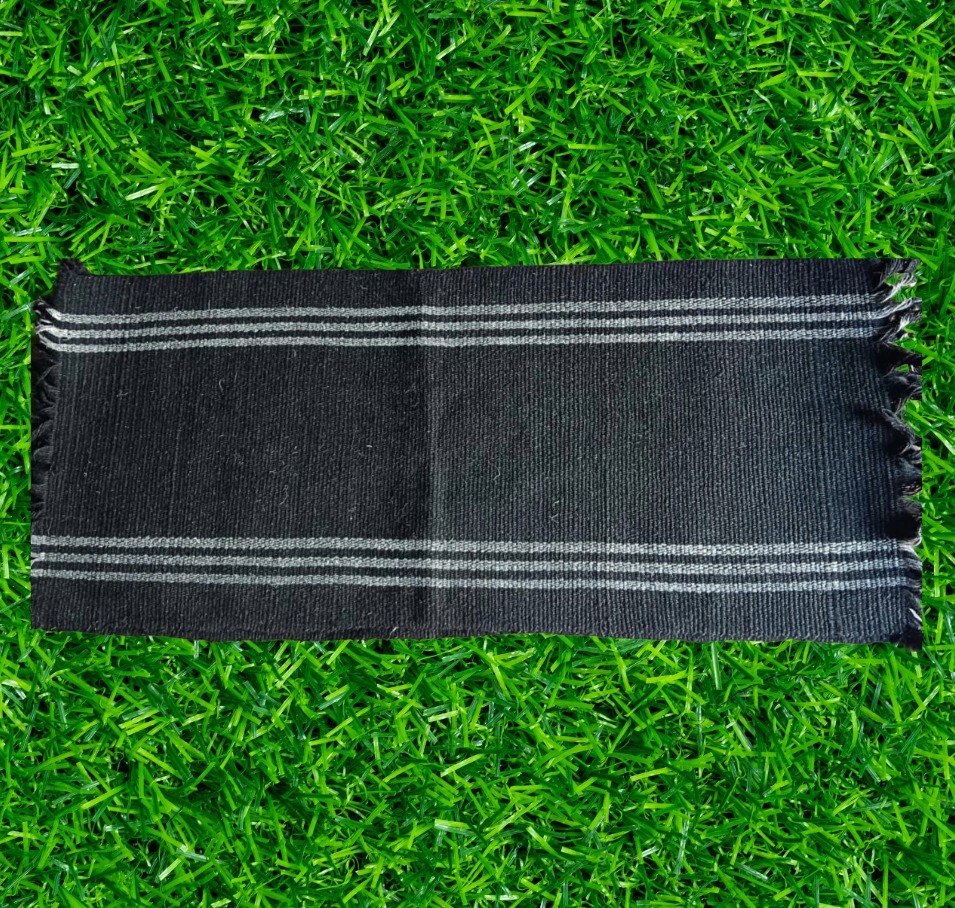
The yoga mat you practice on influences more than just your asanas—it impacts your health, the environment, and even the depth of your spiritual practice. As the wellness community increasingly embraces sustainability, natural wool yoga mats, particularly traditional Ghongadi blankets, are emerging as superior alternatives to conventional synthetic mats.
This comprehensive comparison reveals why discerning yogis worldwide are switching from PVC and TPE to natural wool for their practice.
Understanding Yoga Mat Materials: Wool vs Synthetic
Natural Wool Yoga Mats (Ghongadi)
Made from 100% virgin sheep wool, handwoven using traditional techniques. The wool fibers create a dense, cushioned surface with natural grip and temperature regulation. Each fiber is a complex protein structure that interacts dynamically with your body.
Synthetic Yoga Mats
Typically made from:
- PVC (Polyvinyl Chloride) – Most common, petroleum-based plastic
- TPE (Thermoplastic Elastomer) – “Eco-friendly” plastic alternative
- NBR (Nitrile Butadiene Rubber) – Synthetic rubber compound
- EVA (Ethylene-Vinyl Acetate) – Foam-based synthetic
Grip and Stability: Natural Advantage
Wool’s Superior Traction
Wool fibers naturally interlock and grip, creating a non-slip surface that actually improves with moisture. As you sweat during practice, wool fibers absorb perspiration while maintaining traction—the opposite of synthetic mats that become slippery when wet.
Advantages:
- Consistent grip in all poses, especially standing balances
- No need for yoga towels or grip sprays
- Natural texture enhances tactile feedback
- Suitable for both flow and restorative practices
Synthetic Mat Limitations:
- Grip coatings degrade over time
- Slippery when wet
- Require frequent replacement
- Often need yoga towels for hot yoga
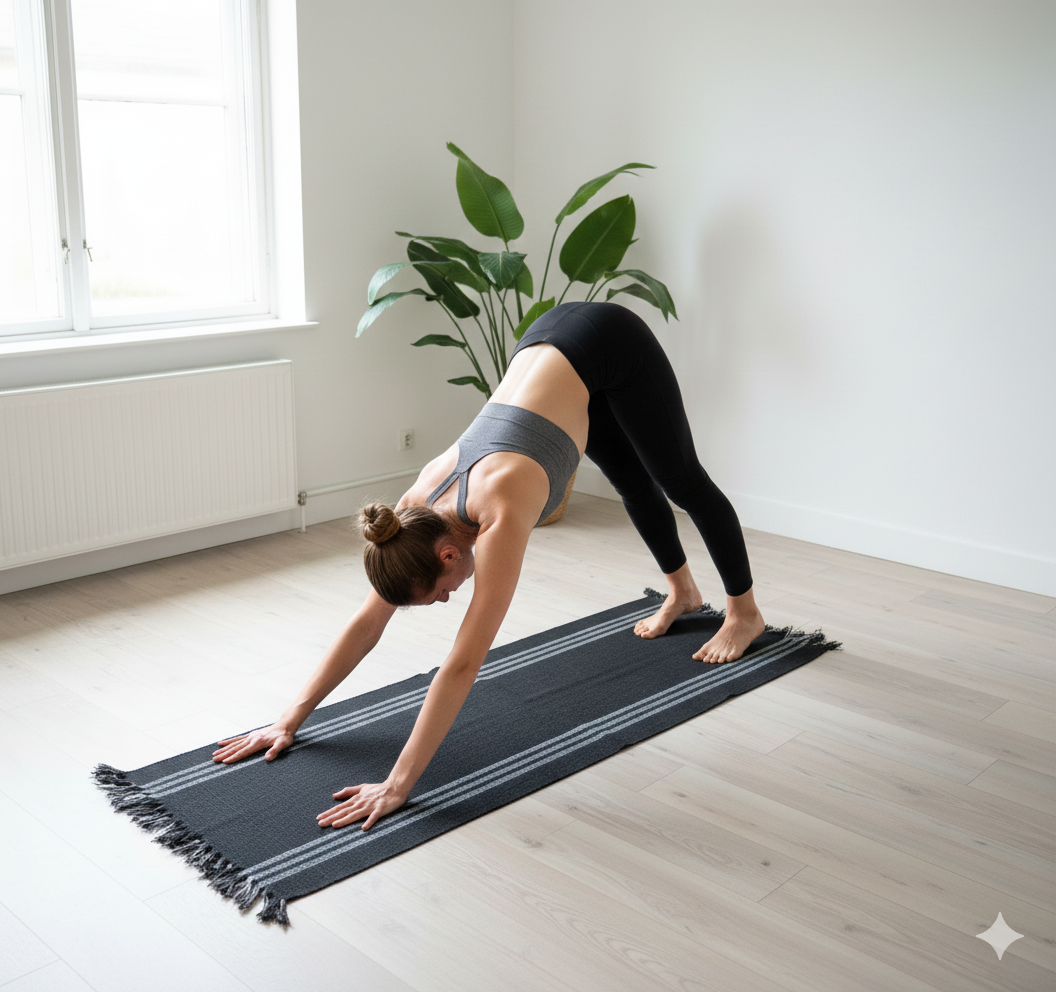
Cushioning and Joint Support: Wellness Comparison
Wool’s Therapeutic Cushioning
The natural crimp in wool fibers creates a three-dimensional cushioning system that:
- Protects knees, wrists, and elbows
- Provides adaptive support based on body pressure
- Maintains structure without flattening
- Offers soothing warmth for joints
Traditional Ghongadi yoga mat: size: 4*2 feet and colour natural black & white perfectly balance comfort and stability.
Synthetic Mat Trade-offs
- Thin mats (3–4mm): Poor joint protection
- Thick mats (6mm+): Too soft for balance poses
- Memory foam: Loses shape quickly
- Hard mats: Increase joint stress
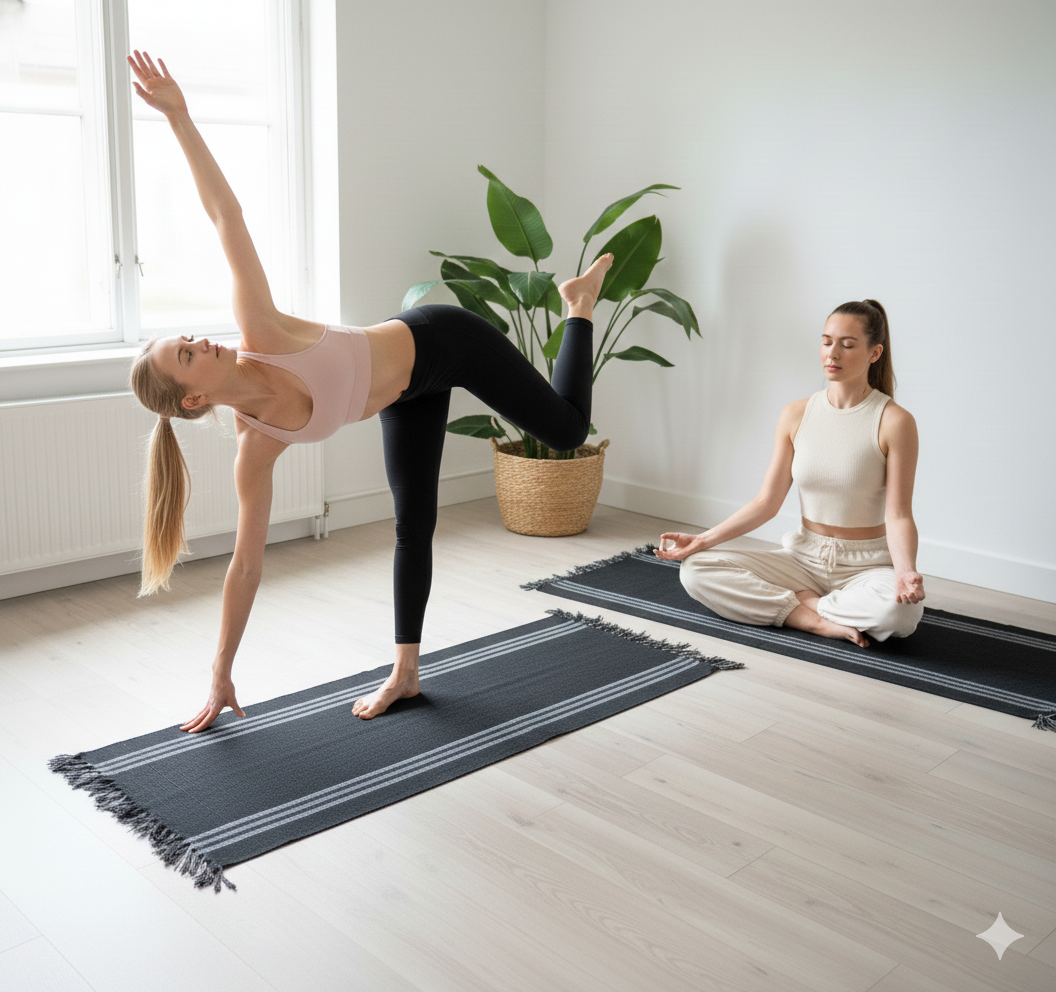
Temperature Regulation: Comfort Throughout Practice
Wool’s Natural Climate Control
- Absorbs moisture vapor (up to 30% of its weight)
- Releases heat when warm, retains when cool
- Prevents clammy sensations
- Stays dry to touch even during intense sessions
Synthetic Mat Issues
- Trap heat and moisture
- Feel cold initially, hot later
- Create slippery surface
- Require towels to absorb sweat
Environmental Impact: Sustainability Reality Check
Wool Yoga Mats – Truly Sustainable
- 100% biodegradable and renewable
- No microplastic shedding
- Minimal processing and low carbon footprint
- Support artisan livelihoods
- Lifespan: 10–20+ years
Synthetic Mats – Environmental Concerns
- PVC releases toxic dioxins
- Petroleum-based and non-biodegradable
- Shed microplastics
- Lifespan: 1–3 years
- Energy-intensive manufacturing
A single wool mat can replace 7–15 synthetic mats over its lifetime.
Health and Safety: Chemical Exposure Analysis
Wool – Pure and Non-Toxic
- No synthetic chemicals or additives
- Naturally antimicrobial and hypoallergenic
- No off-gassing or chemical smell
- Naturally flame-resistant
Synthetic Mats – Hidden Toxins
May contain:
- Phthalates – Hormone disruptors
- Lead/Cadmium – Heavy metals
- VOCs – Respiratory irritants
- Formaldehyde – Common adhesive component
Your mat is where you place your face—material safety matters.
Hygiene and Maintenance: Long-Term Practicality
Wool Yoga Mat Care
- Naturally odor-resistant and antimicrobial
- Hand wash monthly with wool-safe soap
- Air dry flat (avoid direct sun)
- No chemical sprays needed
Synthetic Mat Maintenance
- Requires frequent cleaning with chemicals
- Degrades over time
- Retains odors
- Shorter lifespan
Spiritual and Energetic Considerations
Wool’s Grounding Energy
- Connects you to the earth element
- Enhances prana (life force) flow
- Promotes calm and focus
- Aligns with ahimsa (non-harming) principle
Synthetic Mats
- Made from petroleum – energetically “dead”
- Harsh chemical smell disrupts breathing
- Contradicts yoga’s eco-conscious values
Performance Across Yoga Styles
Wool Excels For:
- Hatha, Yin, and Restorative Yoga
- Meditation and pranayama
- Gentle or therapeutic yoga
- Outdoor and home practice
Also Suitable For:
- Vinyasa and Ashtanga (great grip when warm)
- Hot Yoga (moisture management advantage)
Synthetic May Suit:
- Travel (lighter weight)
- Shared studio use (easy sanitation)
User Experiences
“Switching to a Ghongadi wool mat transformed my practice. No slipping, pure comfort, and that grounding feel is magical.”
— Priya M., Yoga Instructor
“The wool texture feels alive under my hands. My knees don’t hurt anymore, and it even looks beautiful in my space.”
— Sarah L., Yin Yoga Teacher
Making the Switch: Transition Tips
Getting Started
- Allow a week to adapt to the texture
- Start with gentle practice
- Notice improved grip with warmth
- Skip towels—wool manages moisture naturally
Care Tips
- Air after each use
- Spot clean spills
- Deep clean monthly
- Store rolled (not folded)
FAQs: Wool Yoga Mats
Q: Too thick for balance?
A: No, 8–10mm wool mats offer firm stability.
Q: Suitable for hot yoga?
A: Yes, wool wicks moisture better than synthetic.
Q: Cleaning method?
A: Hand wash with cool water and mild soap.
Q: Beginner-friendly?
A: Absolutely. Great cushioning and comfort.
Q: Does wool smell?
A: Properly processed wool has no animal odor.
Where to Buy Authentic Wool Yoga Mats
Look For:
- 100% virgin wool
- Handwoven craftsmanship (e.g., Ghongadi)
- Natural dyes only
- Thickness: 8–12mm
Avoid:
- Synthetic blends
- Machine-made or chemically treated wool
- Suspiciously cheap options
Conclusion: Align Your Practice with Nature
Your yoga mat is an extension of your values. Synthetic mats may be convenient, but they compromise health and authenticity. Wool yoga mats, especially handmade Ghongadi blankets, embody the true essence of yoga—balance, purity, and harmony with nature.
By choosing wool, you support:
- Your body’s wellness
- The planet’s health
- Traditional artisans
- Conscious, sustainable living
Ready to elevate your practice with an authentic wool yoga mat?
Connect with verified Ghongadi exporters for genuine handwoven mats rooted in heritage and wellness.